Hi y’all, I’ve got a new one for you today that I’m really excited about. Before I get into it, I have a little housekeeping to chat through:
I’ve decided to retire the name “The Creative Lead Workshop.” I came up with this name a few years ago for a couple reasons: 1) I thought that I needed to “niche” myself more, and 2) I wasn’t quite ready to use my actual name as my brand. In practice, however, I just don’t like the name much. It’s too long, it’s hard to remember, it feels like unnecessary structure. So I’ve decided it’s got to go. I’m still gonna be tap-tapping at you, but I’m just going to do that with my own name, which feels infinitely simpler. The name of this specific newsletter you’re reading will remain “Lunchbox Notes”, and nothing much will change on your end, although the emails will no longer be from “Cathy from the Creative Lead Workshop”, but rather just from Cathy. I will also be updating the Creative Lead Workshop IG account, if you follow that, but I’ll leave further clarification on that channel itself. Finally, I have also shifted my podcast hosting to Substack, so that everything is in one place. If you look at the tabs on this publication, you’ll be able to find all the episodes (they should also still be showing up on Apple and Spotify). So again, I’m still here, I’m just organizing things in a way that feels simpler to me. Spring cleaning.
Okay, on to the actual content!
The Hydra Team
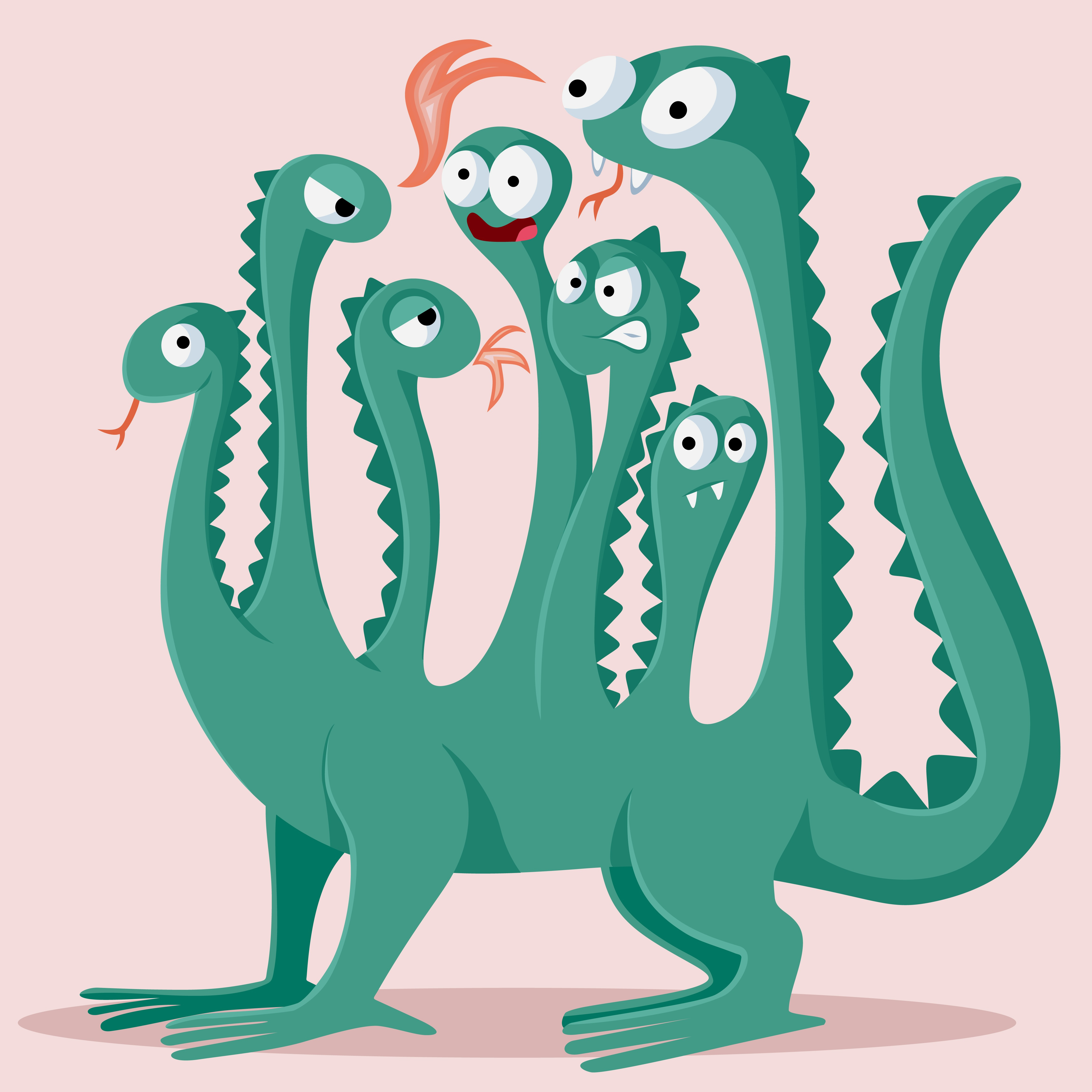
If know any Greek mythology, you may be somewhat familiar with a mythical creature called the hydra. It was a fearsome creature - a serpentine body with several poisonous heads. Legend has it that for every head you cut off, two would grow in its place. It was so deadly that only Hercules was able to defeat it, and even he needed some help.
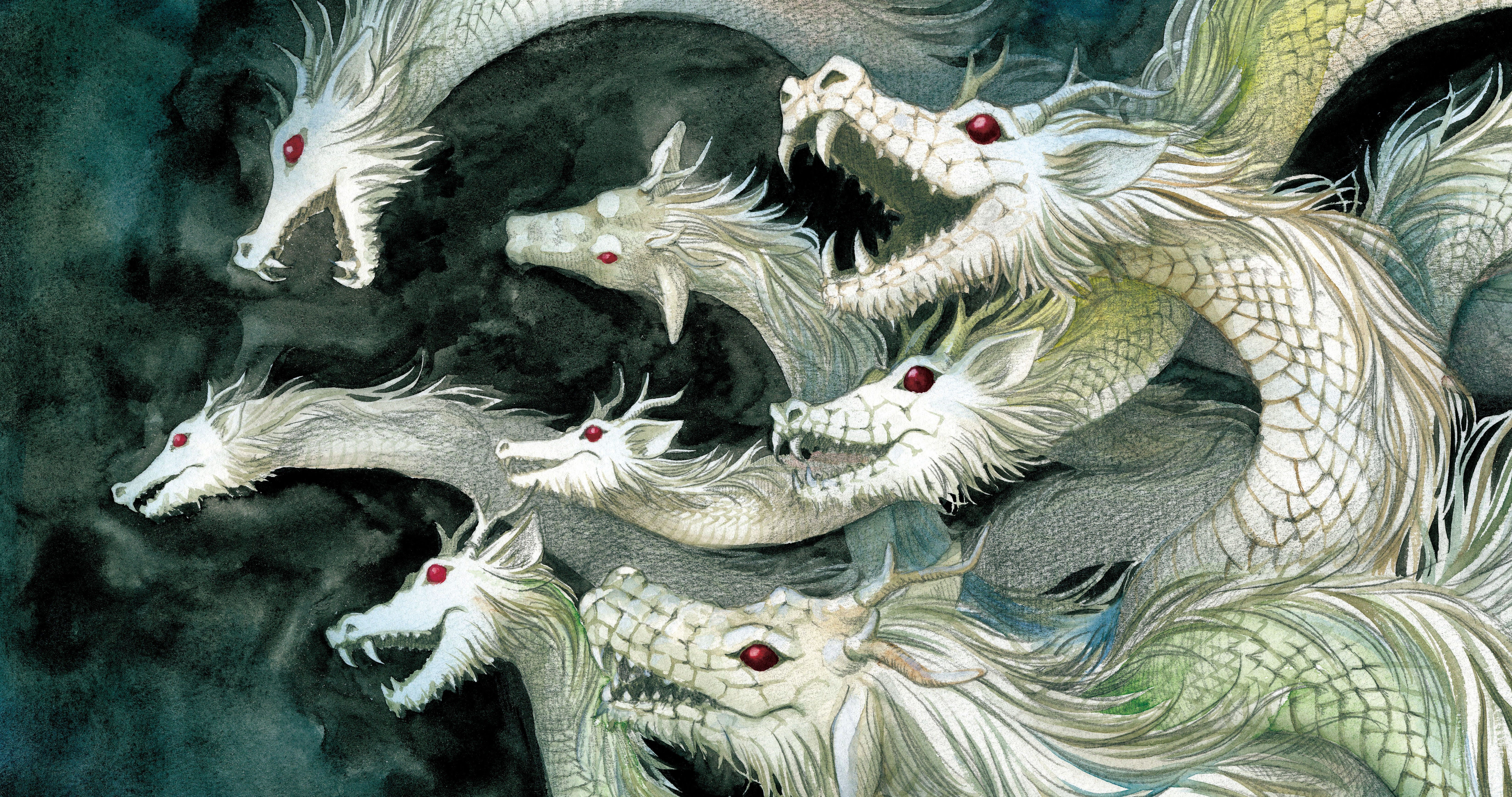
I find this to be a useful metaphor for how I approach team-building. I’ve built ridiculously efficient, highly-performant teams at every company I’ve worked for.
(I refuse to be modest in this regard: to do so would be as much an insult to the people who were part of my teams as it would be to me. My teams are DOPE, and I don’t care who knows it. 😉)
When you have a team model that looks like a hydra, you can “ace” any type of project that comes your way. You can roll with restructures without major losses because you can easily pivot to roll off or on various priorities. You can avoid over-specialization, which puts a big ol’ target on your back.
“You’re the website team? We decided Janet in sales should run all the websites with her son’s friend’s Claude subscription. You’re all redundant now.”
Infinite Talent Flex
Here is the first big principle for me: Fluid Micro-Specialization. Specialization happens on an individual level, not a team level. As a result, my team’s purpose is never confined to one area. We will never be simply “the website team” or the “the streaming team” or the “motion team” because we do all of those simultaneously, and every single person has a hand in every single thing. When leadership tries to consolidate by moving website development overseas, it’s not a big deal because the 3 people who work on that are also critically involved in 3 other processes covering brand design, social media, and streaming. You’ve reabsorbed them before anyone can even think about their being redundant.
What I mean by fluid micro-specialization, specifically, is that each team member has two or three very strong disciplines they can flex between. Examples:
Graphic Design, Motion Design, Project Managment
3D Design, Motion Design, Coding/Developing
Product Design, Motion Design, Projection Design
And so on. I’m basing these on real people on I’ve actually worked with.
Of course, when you hire people, you can evaluate these skillsets before you say yes. When they already work on your team, as is often the case, you must discover them. Most people (especially in large corporations) get used the rules of a large corporation: that you must pick a box and stay there lest you upset others. But human beings aren’t meant to be one thing. No one truly is. That’s where getting to know your people - their desires and concerns - comes in. It might look fru-fru or overly empathetic, but that’s how you figure out where your organization can flex. If you have 10 people and they each have one specific skill they must stick to, you have a limit to the type of projects you can take on. If those 10 people each have 3 different skills they flex between, then you have almost unlimited possibility.
Infinite Leadership Scale
So now you have unlimited possibilities in the type of projects you can take one. But you also need to be able to flex in scale. That’s where my second big principal comes in: Leadership must be modular. NOT flat - and NOT hierarchical.
What in the F do I mean by that?
At HBO, we set it up so any team member could lead a project, as long as they were willing and able to perform the duties required of a lead. Of course, this is a nice way to give people opportunities to develop. But mainly, it’s how you make it possible to make any project you can conceive. A music video collaboration with Florence & The Machine for Game of Thrones. An Apple Watch wellness app for His Dark Materials. A complete redesign of 6,000 HBO.com pages. When leadership can be modular, it means you can make a team that’s as large or small or as specialized as you need it to be: and you also don’t have to “waste” the management skills of an extremely senior manager on things that are smaller scale. It’s not flat, because you still need to know who’s accountable and in charge of specific items. It’s just that it’s NOT narrowly defined into exact teams with a set number of members, and only specifically-titled people being able to do the leading, the way I’ve seen many other organizations do it.
Infinite Criticality
Third major principle: You must involve your team in multiple critical processes and you must be telling the story of how critical those things are (with data). I’m talking about things that may be difficult to replace or hand-off in the event of a restructure, but I’m also talking about things that require advanced specialization, like making A/V assets packages or IG filters. When you have more than one critical team function, you’re much less vulnerable to restructuring. By the way, you only own essential functions that make sense to own; you don’t grab for things that seem essential just because you want to look important. That will backfire immediately.
Summary
I could say much more, which is why this is the topic of one of the books I’m working on for managers. But I’ll leave you will a few points.
The Hydra Team - Principles:
Leadership must be modular. NOT flat and NOT hierarchical.
Everyone should have two or three very strong disciplines that they can flex between.
Own the most critical items (not just the flashiest ones, though high-specialized or prioritized areas are important for visibility).
Tell the team’s story as well as you can. Keep data. Data is power.
Methodology:
A clear list of tasks/priorities that is shuffled as needed
A culture of proactive communication, and planning
A culture of knowledge sharing, file sharing, etc
A culture of inclusion and being willing to hand off projects at any step
Team members that can focus or flex when needed
Avoid over-hiring. Eg, hiring too fast or hiring someone at a much higher level than required to perform the job function.
Everyone is expected to do some amount of project management: note-taking is not just for “junior” people
Advantages:
Always able to pivot and create new value
Stronger than the individual parts alone
Extremely efficient - very little wasted time when addressing notes or feedback
Increasing the team’s collective expertise through shared knowledge
Hard to kill. A force to be reckoned with.
Disadvantages:
It can be difficult to get used to collaborative autonomy, eg:
Creating updates to design without making unvetted changes to components
The level of proactive communication needed to make it work
Sharing ownership of every project
Not having “final” say or complete control
Learning how to prioritize efficiency over autonomy
Prioritizing being a facilitator over being the star of the project
Hope you enjoyed this one! Catch you on the flip side.
XOXO, Cathy
Disclaimer: when I brag about my team this is not to say we created any of the things I mentioned alone with no other teams or agency support; everything, especially at HBO, is a vast collaboration.